
Custom concentrations and volumes possible starting from 0.5 mg More info
CD55 (DAF), Human, mAb MBC1
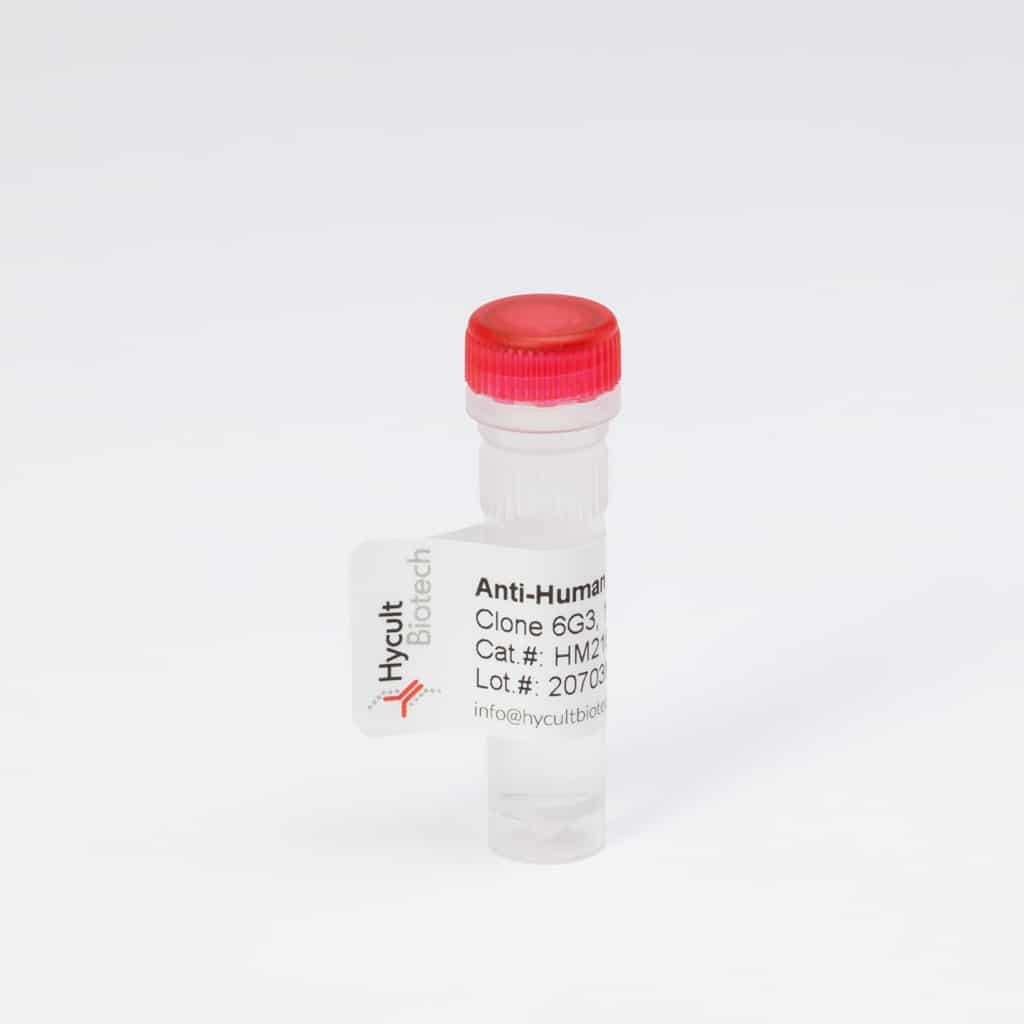
The monoclonal antibody MBC1 recognizes CD55, also designated decay-accelerating factor (DAF).
Read more€139.00 €1,294.00Price range: €139.00 through €1,294.00
The monoclonal antibody HM2449 clone MCB1 recognizes human complement decay-accelerating factor (DAF), also known as CD55. Cells express on their surface several proteins which protect against complement attack, namely complement receptor I (CR1), CD55/DAF, membrane cofactor protein (MCP) and CD59. CR1, CD55/DAF and MCP regulate the activation pathways of complement by either accelerating decay of the C3 and C5 convertase (CR1, CD55/DAF) or acting as cofactors for the serine protease factor I, which cleaves and irreversibly inactivates C3b (CR1, MCP).
Human CD55/DAF is a protein of 381 amino acids resulting in a ~70 kDa transmembrane protein that binds C3b and C4b to inhibit formation and half-life of the C3 convertases. It belongs to the receptors of complement activation (RCA) family. CD55/DAF is broadly distributed among cells in contact with plasma complement proteins, including both haematopoietic and non-haematopoietic cells. Although CD55/DAF does not have an essential role in controlling haemolysis of erythrocytes, it has an important role in regulation of the deposition of C3 on nucleated cells.
Together with other complement regulators CD55/DAF protects self-cells from autologous complement-mediated injury. CD55/DAF cooperates with CD46 in circumventing autologous C3 deposition, while CD59 inhibits the pathway at the critical end-point. CD55/DAF is overexpressed in certain tumours thereby limiting the complement-dependent cytotoxicity of therapeutic anticancer antibodies. Using DAF blocking antibodies targeted specifically at cancer cells in combination with immunotherapeutic monoclonal antibodies of cancer may improve the therapeutic effect in cancer patients.

 Powered by Bioz
You may be interested in…
-
View product €139.00 €474.00Price range: €139.00 through €474.00
-
View product €139.00 €431.00Price range: €139.00 through €431.00