
Custom concentrations and volumes possible starting from 0.5 mg More info
C5a/C5a-desArg/C5 (C5a N-term), Mouse, mAb HB17F12
The monoclonal antibody HB17F12 recognizes mouse C5a and C5a-desArg and is also reactive with C5.
Read more€139.00 €474.00Price range: €139.00 through €474.00
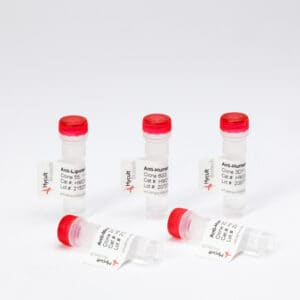
Antibody HM1160 clone HB17F12 recognizes mouse C5a and C5a-desArg and is also reactive with C5. The epitope is located within the first 23 amino acids of the N-terminal side of the C5a protein.
The complement system is a key component of innate immunity and consists of more than 30 plasma and membrane-associated proteins that cooperate to detect and eliminate pathogens, damaged cells, and immune complexes. Activation occurs through the classical, lectin, or alternative pathway. Despite their different initiation mechanisms, all three pathways converge at the cleavage of complement component C3 and subsequently lead to the formation of C5 convertases and cleavage of C5, a 190 kDa circulating glycoprotein primarily synthesized in the liver. C5 consists of a disulfide-linked α-chain (~111 kDa) and β-chain (~75 kDa). Proteolytic cleavage of C5 produces the fragments C5a and C5b. Whereas C5b initiates formation of the membrane attack complex (MAC; TCC, C5b–9), which forms cytolytic pores in target membranes, C5a functions as a potent inflammatory mediator that orchestrates immune cell recruitment and activation.
C5a is a 74–amino acid polypeptide (9.8 kDa) derived from the N-terminus of the C5 α-chain and represents one of the most potent anaphylatoxins generated during complement activation. In circulation, C5a is rapidly converted by serum carboxypeptidases into the more stable but still biologically active derivative C5a-desArg. In humans C5a exerts its biological effects primarily through two seven-transmembrane receptors: C5aR1 (CD88) and C5aR2 (C5L2/GPR77). These receptors are widely expressed, particularly on immune cells such as neutrophils, macrophages, monocytes, and T cells. Activation of C5aR1 initiates G-protein–coupled signaling pathways that stimulate the production of pro-inflammatory cytokines including TNF-α, IL-1β, IL-6, and IL-8. Through these signaling pathways, C5a induces smooth muscle contraction, increases vascular permeability, promotes mast cell and basophil degranulation, and stimulates the release of lysosomal enzymes. In addition, it acts as a powerful chemoattractant, directing these cells to migrate to sites of inflammation.
Although these responses are essential for host defense, excessive C5a generation contributes to the pathogenesis of numerous inflammatory and immune-mediated diseases, including sepsis, ischemia-reperfusion injury, autoimmune disorders, and cardiovascular disease. Consequently, the C5–C5a axis has emerged as an important therapeutic target. Inhibition of complement activation at the level of C5, using e.g. eculizumab, prevents the generation of C5a and the formation of the terminal complement complex. This makes complement inhibition a promising strategy for controlling complement-driven inflammation.
Antibody HM1160 is, at least but not limited to, applicable in the following applications: ELISA and western blotting. Please, contact Hycult Biotech for further information.

 Powered by Bioz
You may also like…
-

TCC, Human, ELISA kit
Cross reactivityCynomolgus monkey – Yes, Horse – No, Mouse – No, Pig – Yes, Rabbit – Yes, Rat – NoView product €786.00 €1,271.00Price range: €786.00 through €1,271.00 -
View product €139.00 €46,037.00Price range: €139.00 through €46,037.00
You may be interested in…
-
View product €786.00 €1,271.00Price range: €786.00 through €1,271.00
-
View product €139.00 €431.00Price range: €139.00 through €431.00