
 Hycult Biotech
The complement system is a powerful part of the innate immune system, playing an essential role in host defense, inflammation and the clearance of pathogens. But with great power comes the need for control. Uncontrolled complement activation can damage healthy cells and tissues. This is where complement regulators come into play.
Complement regulators are a diverse group of proteins that carefully control complement activation at different stages of the cascade. Some act in the fluid phase, while others are expressed on the surface of host cells to protect them from complement-mediated damage.
Soluble complement regulators
| C1-Inhibitor (C1-INH) |
| Factor I (FI) |
| Factor H (FH) |
| Factor B (FB) |
| C4b-binding protein (C4BP) |
| Properdin (CFP) |
| Clusterin (CLU) |
| Vitronectin (VTN) |
Membrane-bound complement regulators
| CD46/MCP – cofactor for Factor I-mediated inactivation of C3b and C4b |
| CD55/DAF – accelerates the decay of C3/C5 convertases |
| CD35/CR1 – cofactor for Factor I and promotes decay of complement convertases |
| CD59 – inhibits formation of the membrane attack complex (MAC) |
NEW: CD46 and CD55 antibodies
We are excited to introduce two new monoclonal antibodies targeting key membrane-bound complement regulators: CD46 (MCP) and CD55 (DAF).
CD46 and CD55 play complementary roles in protecting host cells from excessive complement activation. CD46 acts as a cofactor for Factor I-mediated inactivation of C3b and C4b, while CD55 accelerates the decay of C3 and C5 convertases.
Our new human antibodies are available for research applications, including functional studies, immunoassays, flow cytometry and western blot, providing researchers with additional tools to study complement regulation and dysregulation.
Explore our new antibodies:
Why are complement regulators important?
The balance between complement activation and regulation is essential for maintaining healthy tissues. When this balance is disrupted, excessive or inappropriate complement activation can contribute to inflammation and tissue damage.
As a result, complement regulators are increasingly studied in research into complement-mediated diseases, autoimmune and inflammatory disorders, renal and ophthalmic diseases, and complement-targeted therapies.
Understanding how individual regulators function, and how they interact with other components of the complement system, can provide valuable insights into disease mechanisms and potential therapeutic strategies.
Meet the complement regulators
C1 inhibitor: regulating the classical and lectin pathways
C1 inhibitor (C1-INH) is an important soluble regulator of the classical and lectin pathways. It inhibits the proteases C1r and C1s, thereby limiting activation of the classical pathway. C1-INH also regulates MASP-1 and MASP-2 in the lectin pathway.
Because of its role in controlling early complement activation, C1-INH is an important regulator of complement-mediated inflammation.
Factor H: regulating the alternative pathway
Factor H is one of the most important soluble regulators of the alternative pathway. It binds to C3b and helps control the formation and stability of the alternative pathway C3 convertase. Factor H also acts as a cofactor for Factor I-mediated inactivation of C3b.
Because of its central role in alternative pathway regulation, Factor H has become an important focus of complement research.
Factor I: inactivating C3b and C4b
Factor I is a soluble serine protease that regulates complement by cleaving and inactivating C3b and C4b. Its activity depends on cofactors, including Factor H, CD46 and CR1.
Together, Factor I and its cofactors provide an important mechanism for preventing prolonged complement activation.
C4b-binding protein: regulating the classical and lectin pathways
C4b-binding protein (C4BP) is a soluble complement regulator that primarily controls the classical and lectin pathways. It binds to C4b and promotes the dissociation of the C3 convertase. C4BP also acts as a cofactor for Factor I-mediated cleavage of C4b.
Through these activities, C4BP helps limit complement activation and protect host tissues from excessive complement-mediated damage.
Clusterin: regulating terminal complement complex formation
Clusterin is a soluble complement regulator that acts primarily at the terminal stage of complement activation. It binds to components of the terminal complement pathway and inhibits the assembly and insertion of the membrane attack complex (MAC), also known as the terminal complement complex (TCC).
By interfering with MAC formation, clusterin helps protect host cell membranes from complement-mediated damage.
Vitronectin: regulating terminal pathway activity
Vitronectin is a soluble complement regulator that acts mainly on the terminal pathway. It binds to the soluble terminal complement complex and prevents its insertion into cell membranes, thereby limiting formation of the membrane attack complex (MAC).
Together with clusterin, vitronectin helps protect host cells from complement-mediated membrane damage.
CD46: protecting cells through cofactor activity
CD46, also known as membrane cofactor protein (MCP), is a membrane-bound complement regulator found on most nucleated cells.
CD46 acts as a cofactor for Factor I, helping to inactivate C3b and C4b deposited on the cell surface. In this way, CD46 contributes to the protection of host cells from complement-mediated damage.
CD55: accelerating complement convertase decay
CD55, also known as decay-accelerating factor (DAF), provides another important layer of protection at the cell surface.
Rather than directly inactivating C3b or C4b, CD55 accelerates the decay of C3 and C5 convertases. By reducing the lifetime of these convertases, CD55 helps limit amplification of complement activation.
CD59: blocking the final step
Complement regulation does not stop at C3 and C5. At the terminal stage of the cascade, CD59 helps protect host cells by inhibiting formation of the membrane attack complex (MAC).
This makes CD59 an important final line of defense against complement-mediated cell damage.
Complement regulator research products

View product
€858.00 €1,413.00Price range: €858.00 through €1,413.00
View product
€139.00 €431.00Price range: €139.00 through €431.00
CD55 (DAF), Human, mAb MBC1
Application
Bio-layer Interferometry, Flow cytometry, Functional studies, Immuno assays, Western blot
View product
€139.00 €1,294.00Price range: €139.00 through €1,294.00
CD46 (MCP), Human, mAb M160
Application
Bio-layer Interferometry, Flow cytometry, Functional studies, Immuno assays, Immuno precipitation, Western blot
View product
€139.00 €1,294.00Price range: €139.00 through €1,294.00
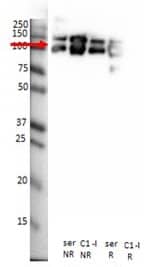
View product
€139.00 €431.00Price range: €139.00 through €431.00
CD59, Human, mAb MEM-43
Application
Flow cytometry, Immuno precipitation, Paraffin sections, Western blot
View product
€139.00 €530.00Price range: €139.00 through €530.00

View product
€858.00 €1,413.00Price range: €858.00 through €1,413.00

View product
€858.00 €1,413.00Price range: €858.00 through €1,413.00
Exploring complement regulation
From Factor H and Factor I in the fluid phase to CD46, CD55 and CD59 at the cell surface, complement regulators work together to keep complement activation under control.
Studying these proteins can help researchers better understand the mechanisms underlying complement activation and regulation.
Calculate your ELISA data easily
With the ELISA calculator you can easily calculate ELISA data. Assayfit Pro helps to perform curve fitting. The calculator generates advanced reports, fit graph, fit parameters and goodness of fit are shown.
We are glad to support you!
Take advantage of our dedicated support team for any technical assistance you need while using our products or considering them for your research needs.
Other interesting posts